


Yonkers, NY | Westchester County | Boyce Thompson Pavilion
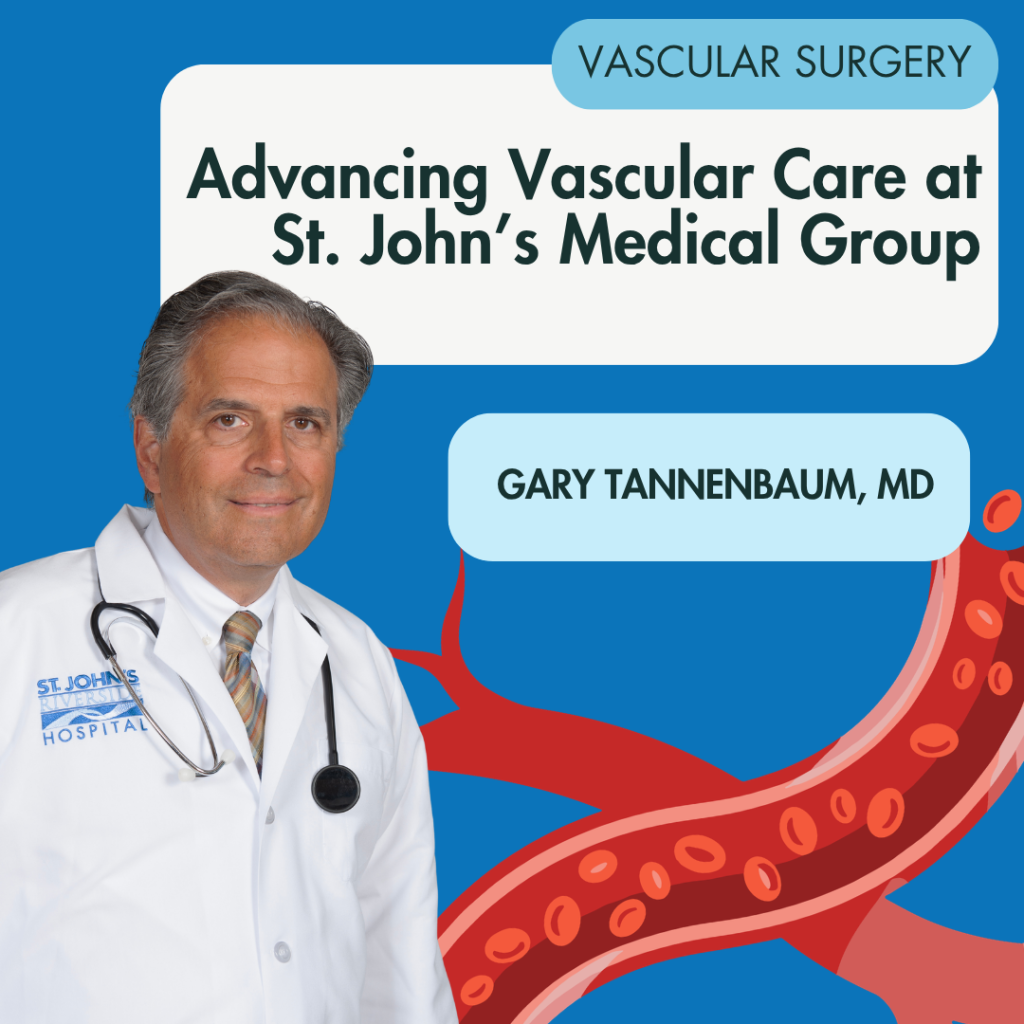
At St. John’s Medical Group, Dr. Gary Tannenbaum draws on decades of vascular expertise to care for the community. We sat down with him to discuss how vascular care is evolving, the latest advances in treating deep vein thrombosis (DVT), and how St. John’s Medical Group is expanding access to treatment close to home.
“Being a member of the Medical Group provides me with the opportunity to continue my career in Vascular Surgery while helping to advance the mission of the hospital to provide cutting edge care to the people of Yonkers and the Hudson Valley.”
A Comprehensive, Community-Based Approach to Vascular Care
Dr. Tannenbaum treats a broad range of vascular conditions, but he highlights deep vein thrombosis (DVT) as one of the most common and impactful issues affecting patients today. Millions of Americans are affected by DVT each year, and Dr. Tannenbaum emphasizes how crucial early recognition and treatment are.
“Blood clots in the deep veins can cause swelling, pain, and in severe cases, life-threatening complications if the clot travels to the lungs.”
For most patients, treatment begins with anticoagulants (“blood-thinners”), but significant advancements now offer more options for those with severe swelling or extensive clots. Through needle access, large clots can be cleared to restore blood flow, and advanced ultrasound tools placed inside the veins help identify blockages or compressed areas. Stents can then be placed to provide long-term improvement in venous circulation.
What Patients Should Know About DVT
Dr. Tannenbaum stresses that DVT can be subtle. Many people expect intense pain, but symptoms are often milder. He explains, “sudden swelling of one leg may be a sign … Pain in the leg is common but may not be severe. ” Factors like dehydration or certain medical conditions can increase risk. Dr. Tannenbaum emphasizes that anyone with persistent swelling should seek prompt evaluation, since “a simple ultrasound study is extremely sensitive and accurate in diagnosing DVT.”
New Technologies on the Horizon
One of the most exciting developments is the launch of a carotid artery stenting program at St. John’s Medical Group.
“This will allow the treatment of narrowed carotid arteries… in a less invasive and safer manner than the traditional surgery or medical management.”
New imaging technologies will also allow the team to treat more patients with abdominal and thoracic aortic aneurysms.
Collaboration Across the Medical Group
Vascular care at St. John’s does not exist in isolation. Dr. Tannenbaum works closely with multiple departments to provide comprehensive care.
He regularly collaborates with general surgery, orthopedics, and radiology. In certain spine surgeries, for example, vascular expertise is essential to expose delicate structures safely:
“My job in these cases is to provide safe exposure without damage to these important vessels.”
As part of the multi-specialty Medical Group, he contributes both surgically and medically by supporting patients with lifestyle changes, smoking cessation, and appropriate medication.
The Future of Vascular Care at St. John’s
As demand for vascular services grows, Dr. Tannenbaum sees significant opportunities to expand care within the community.
“The population is aging… My goal is to help these people stay active and independent as long as possible.”
Future priorities include treating arterial blockages in the legs, managing varicose veins, reducing stroke risk by addressing carotid artery disease, and promoting preventive vascular health across the medical group.
He sees St. John’s Medical Group playing a major role in preventive vascular health, particularly regular monitoring and lifestyle support delivered through physicians, nurse practitioners, and allied health professionals.
High-Level Care, Close to Home
Throughout his career, Dr. Tannenbaum has worked to ensure that advanced vascular care is available within the community. By introducing advanced techniques with St. John’s, he ensures patients can avoid the stress and cost of traveling to large tertiary centers.
“Whenever possible, most of the conditions we treat can be completed in a local, friendly environment… As the newest technologies become available, we will incorporate them into our treatment programs.”
As he puts it, his goal has always been to “provide the highest level of care to our patients, ” adopting new techniques as they become available and maintaining the welcoming, community-focused approach that defines St. John’s Medical Group.
To hear more from Dr. Gary Tannenbaum, watch his full “Riverside Talk” podcast. Visit the St. John’s Medical Group website to learn more or schedule a visit.